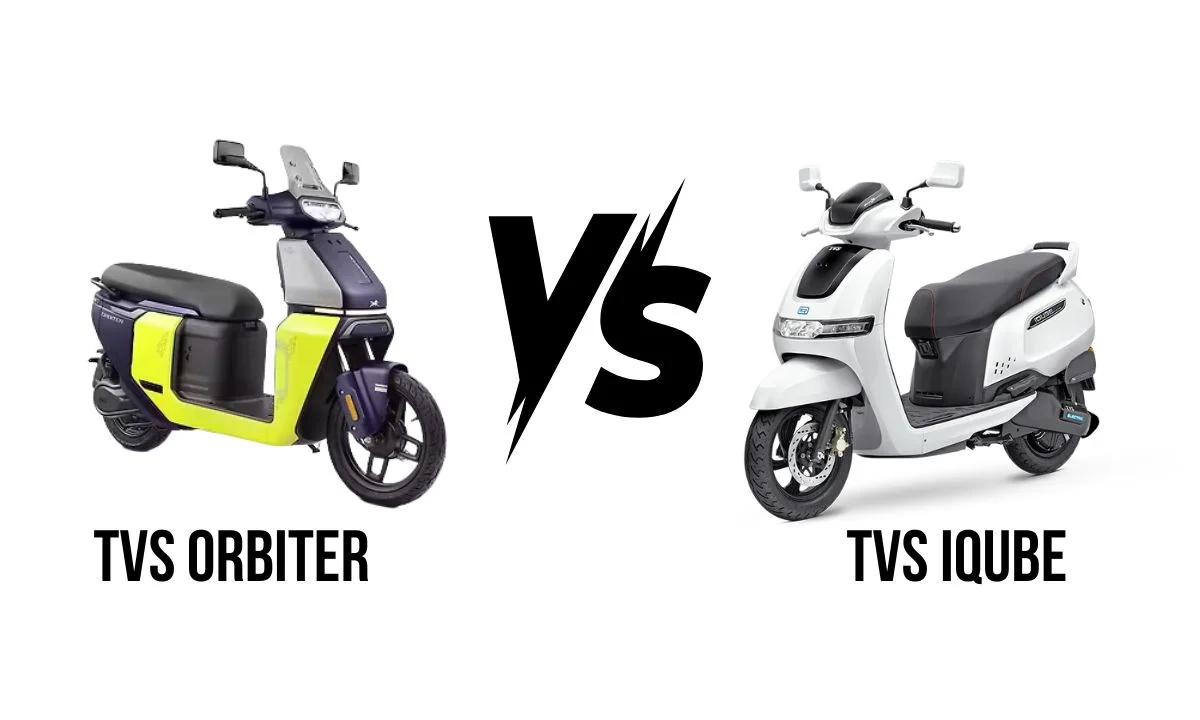
TVS Orbiter vs TVS iQube; TVS recently launched its newest electric scooter, the Orbiter. The e-scooter comes at a price of Rs 99,900 (ex-showroom Bengaluru, including PM E-Drive scheme), making it the most affordable electric scooter from the Hosur-based manufacturer. In fact, it is Rs 2,615 less expensive than the most affordable 2.2kWh variant of the TVS iQube. We explain the differences between the two most affordable TVS electric scooters in this below article.
TVS Orbiter vs TVS iQube: Electric Scooter Comparison 2025
| Feature | TVS Orbiter | TVS iQube (3.1 kWh base variant) |
|---|---|---|
| Price (ex-showroom) | ₹99,900 | ₹1,02,605 |
| Design Language | Futuristic, minimalist, dual-tone | Familiar, premium, family-oriented |
| Total Range (Claimed) | 158 km (IDC-certified) | 123 km for 3.1 kWh version |
| Top Speed | 68 km/h | 82 km/h |
| Motor Power | 2.5 kW (3.3 bhp) | 4.4 kW (5.9 bhp) |
| Wheels & Brakes | 14″ front, 12″ rear, drum both ends | 12″ wheels, front disc, rear drum |
| Ground Clearance | 169 mm | 157 mm |
| Kerb Weight | 112 kg | Around 117 kg |
| Storage Capacity | 34 liters under-seat | 32 liters under-seat |
| Instrument Cluster | 5.5″ LCD with Bluetooth, cruise control, reverse, hill-hold | 5″ TFT with nav, alerts, ride modes |
| Charging Time (0–80%) | About 4 hours 10 minutes (650W charger) | About 4 hours 10 minutes (650W), 2 hours via 950W charger |
| Range of Battery Options | Single 3.1 kWh pack | Multiple: 2.2, 3.1, 3.5, 5.3 kWh variants |
Pricing and Target Audience
The Orbiter, priced just under ₹1 lakh, is TVS’s most affordable electric scooter aimed at urban riders seeking value and functionality. In contrast, the iQube commands a higher premium, reflecting its status as TVS’s more premium, family-oriented model. TVS positions both models distinctly to avoid cannibalization—Orbiter for new-age urbanites, iQube for discerning family users.
Design and Ergonomics
Visually, the Orbiter stands out with a futuristic, minimalist aesthetic—boxy dual-tone body panels, integrated DRL strips, and an apron-mounted headlamp delivering a modern vibe. It also features a flat extended seat and spacious flat footboard for greater practicality.
The iQube offers a conventional yet elegant design with clean bodywork, LED lighting, and a glowing TVS Electric logo on the side cover—offering subtle premium cues familiar to long-time scooter users.
Range, Performance, and Battery Options
The Orbiter is powered by a 3.1 kWh battery offering a claimed IDC-certified range of 158 km, ideal for urban commuting. Charging takes roughly 4 hours 10 minutes via the standard 650W charger.
The iQube, with the same 3.1 kWh base, delivers a lower 123 km range on paper but includes larger 3.5 and 5.3 kWh options that can offer up to 212 km range. With the optional fast charger (950W), charging time drops to around 2 hours—offering faster turnaround.
Motor Output and Top Speed
Orbiter’s hub motor produces 2.5 kW (3.3 bhp), achieving a top speed of around 68 km/h—adequate for inner-city use. The iQube is more powerful, rated at 4.4 kW (5.9 bhp), and reaches up to 82 km/h. For riders covering longer stretches or highway link roads, the iQube delivers stronger performance.
Chassis, Brakes, and Maneuverability
The Orbiter rides on a larger 14-inch front wheel (12-inch rear)—a setup better suited for handling urban road conditions and potholes. However, it comes with drum brakes on both ends.
The iQube uses 12-inch wheels front and rear, but features a front disc brake for better stopping power—beneficial in real-world scenarios. Ground clearance is also higher on the Orbiter (169 mm vs. 157 mm), offering better adaptability to Indian road conditions.
Storage, Weight, and Practicality
Orbiter offers a more practical 34-liter underseat storage, compared to iQube’s 32 liters. The Orbiter is also lighter in kerb weight by approximately 5 kg, which contributes to nimble handling—even though its wheel setup is larger.
Connectivity and Features
The Orbiter includes a 5.5-inch LCD cluster with Bluetooth—offering live tracking, alerts, hill-hold, reverse, cruise control, and smart features via the TVS SmartXonnect suite. These features enhance safety and convenience while remaining easily navigable.
The iQube steps up connectivity with a 5-inch TFT screen and the Y-Connect app for navigation, ride modes, alerts, and richer UX. For tech-oriented users, iQube offers deeper integration.
Verdict: Which Scooter Should You Consider?
Choose the TVS Orbiter if you:
- Are price-conscious but don’t want to compromise on range or comfort.
- Prefer a fresh, urban-focused design.
- Value features like cruise control, reverse, and smart alerts in an accessible package.
Choose the TVS iQube if you:
- Want a more powerful motor and higher top speed.
- Prefer faster charging and a broader range with larger battery options.
- Appreciate a premium feel with advanced TFT interface and refined finishing.
Final Thoughts for Discover
The TVS Orbiter and iQube each bring distinct strengths to India’s electric scooter landscape. One offers affordable, practical innovation; the other elevates performance with premium connectivity. Your choice should align with your city usage patterns, desired tech experience, and range needs.

Raghav is a passionate automotive enthusiast and a professional content creator at MotoElectra.com. With years of experience in the automotive industry, Raghav has dedicated his career to sharing detailed insights, reviews, news, and guides on cars, bikes, electric vehicles, and related technologies. His work reflects a deep understanding of both traditional and emerging automotive trends, helping readers make informed decisions.